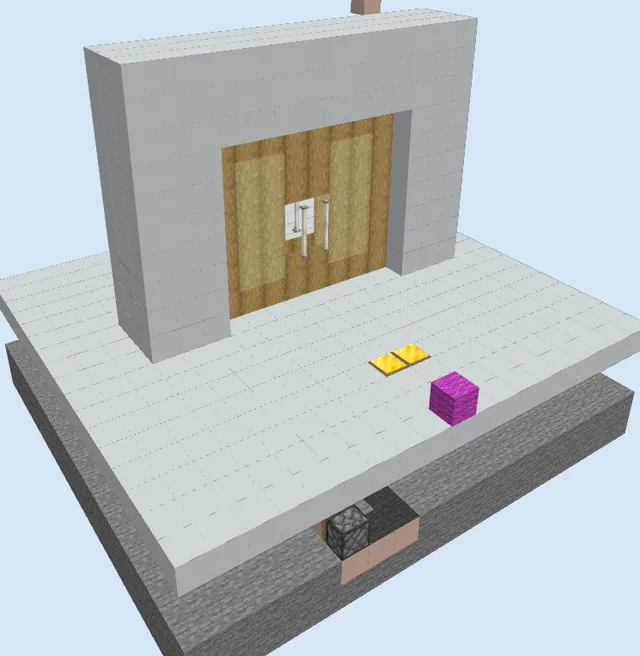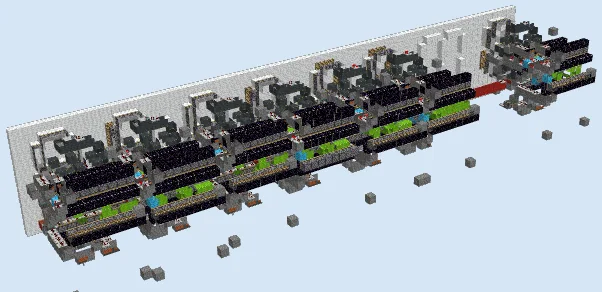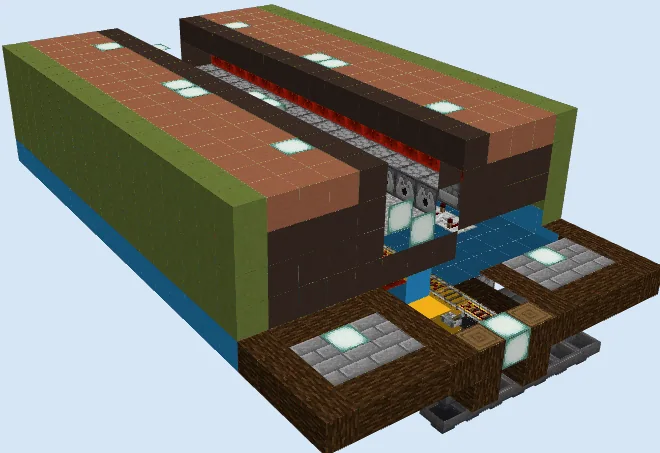
What you are building
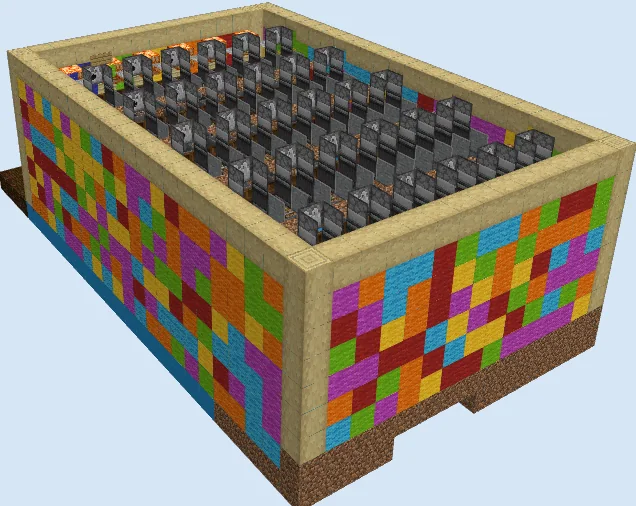
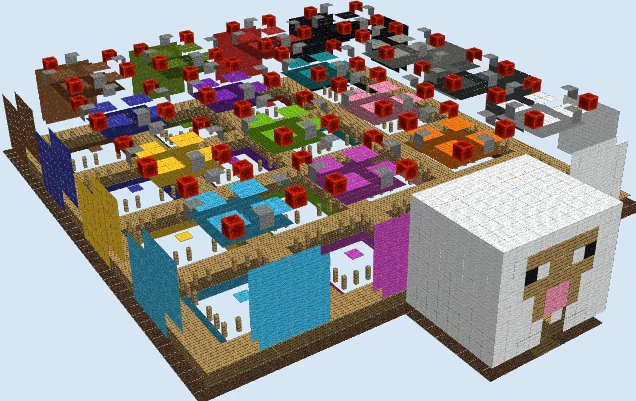
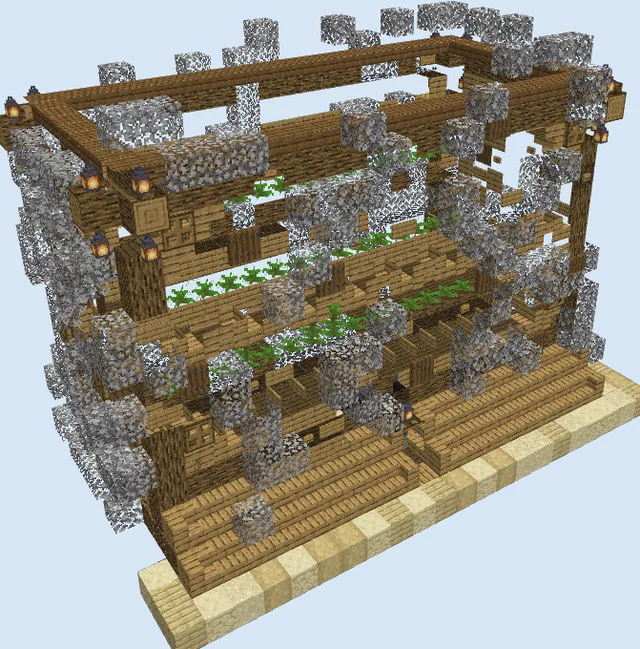
The Automatic Observer Sheep Wool Farm provides a hands-free method to collect large quantities of wool across every color variant. With 32 dedicated shearing cells arranged in two parallel rows, this farm removes the chore of chasing down sheep with shears, letting you focus on building while your storage fills up.
Because sheep require grass to regrow their fleece, build this farm in an active area or near your main base where chunk loading is reliable. Built-in sea lanterns ensure constant illumination, allowing grass to spread efficiently between feedings day and night.
Materials 1,101 blocks · 28 types
- Light Blue Concrete2553 stacks + 63
- Lime Terracotta1442 stacks + 16
- Terracotta1001 stack + 36
- Gray Terracotta901 stack + 26
- Grass Block48
- Yellow Concrete47
- Repeater36
- Redstone Block35
- Redstone Torch33
- Redstone Wall Torch32
- Observer32
- Dispenser32
- Sticky Piston32
- Spruce Wood28
- Powered Rail24
- Glass24
- Green Concrete18
- Hopper18
- Rail18
- Sea Lantern15
- Stone Bricks10
- Redstone Wire8
- Dropper8
- Comparator4
- Chest4
- Cobblestone3
- Spruce Log2
- Lever1
How it works
Each sheep stands trapped on a grass block directly monitored by an observer. The instant a sheep eats the grass to restore its wool, the block updates from grass to dirt. This triggers the observer, which emits a redstone pulse through the central circuitry to activate a dispenser loaded with shears facing the stall, shearing the sheep immediately.
Underneath the grass platform, a minecart with hopper rides along an energized rail loop to pick up dropped wool items directly through the solid blocks. The minecart passes over an intake line of hoppers at the front of the structure, depositing the wool for sorting into chests.
How to use it
To operate the farm, lure or transport sheep into each of the 32 chambers and apply your desired dyes. Fill the dispensers behind each pen with several pairs of shears. Once all sheep are penned and a hopper minecart is placed onto the powered rail circuit, the system runs automatically whenever sheep graze.
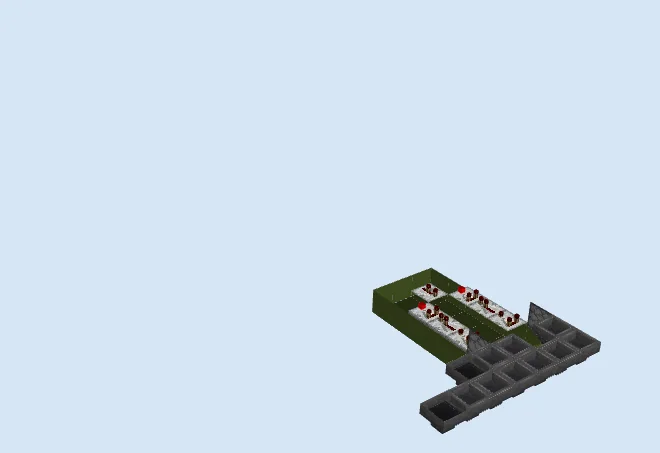
Lay the Foundation and Base Redstone
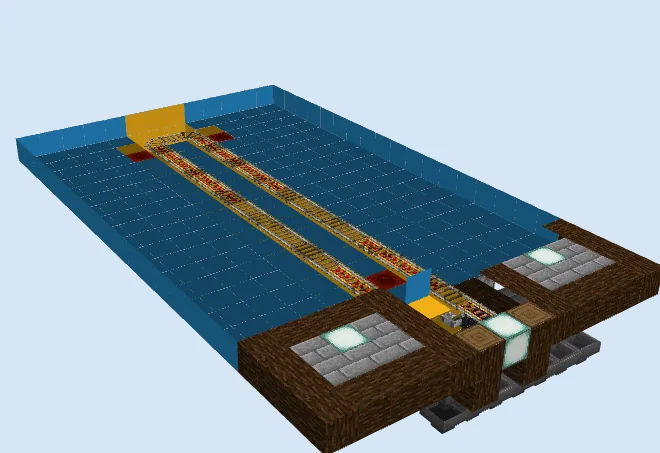
Layers 1–2 of 9Begin by digging out the lower area and placing the front line of hoppers that will receive items from the rail loop. Outline the base footprint using green concrete.
Inside the recessed central trenches, install the first tier of repeaters and redstone connections that will interface with the upper shearing mechanisms.
Build the Rail Circuit and Platform
Layers 3–5 of 9Construct the wide platform floor using light blue concrete across the 13 by 22 block footprint. Run a dual-track loop consisting of rails and powered rails down the center, resting powered sections over redstone blocks to keep the cart moving.
Finish the front collection platform with decorative spruce wood, stone bricks, and recessed sea lanterns over the hopper intake.
Assemble Shearing Pods and Terracotta Casing
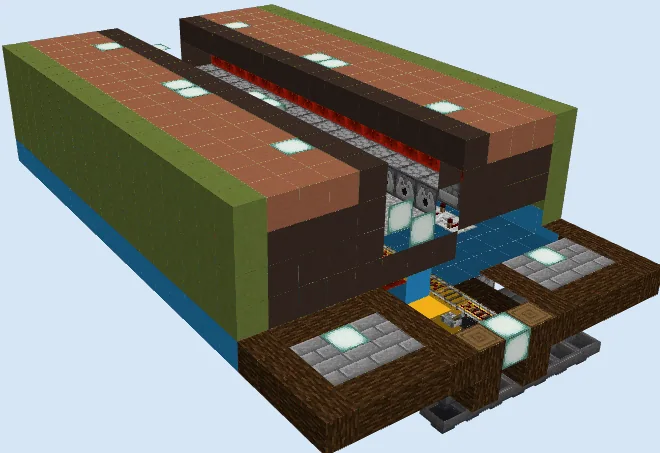
Layers 6–9 of 9Place two parallel lines of grass blocks above the rail line to serve as stall floors, fitting an observer directly against each one to monitor block state changes. Mount dispensers facing inward above the observers, backed by sticky pistons, redstone torches, and redstone lines.
Enclose the sheep pens with glass, then build up the surrounding walls and roof using terracotta, gray terracotta, lime terracotta, and integrated sea lanterns to ensure proper light levels.
Finishing touches
Verify that every grass block has neighboring grass to facilitate spreading, and ensure that every dispenser contains at least one pair of shears. Send a hopper minecart along the tracks to ensure it loops smoothly over the front hoppers without stopping or derailing.
Frequently Asked Questions
Why do the grass blocks need adjacent light?
Sheep must consume grass to regrow their fleece, which converts the block into dirt. Dirt blocks can only turn back into grass if they are exposed to sufficient light and have neighboring grass blocks to spread from.
Does this build work in current versions?
The schematic was saved in Java Edition 1.15.2, but the underlying mechanics for sheep grazing and dispenser shearing remain unchanged. We still recommend testing the redstone triggers in a creative world before assembling it in survival.