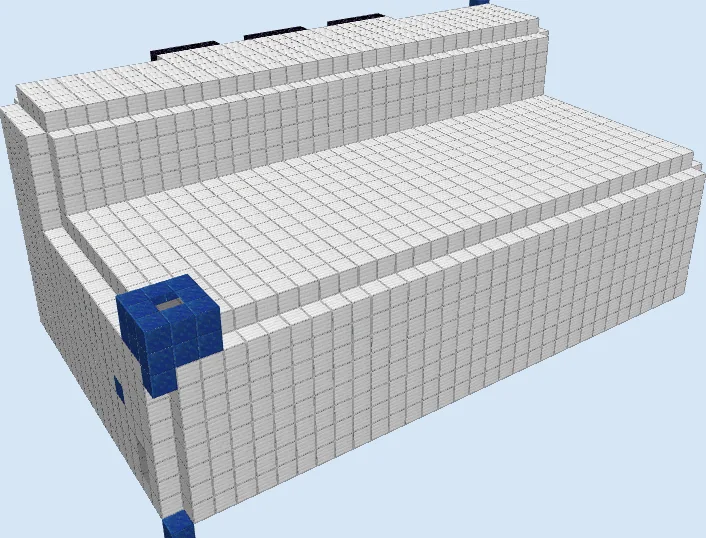
What you are building
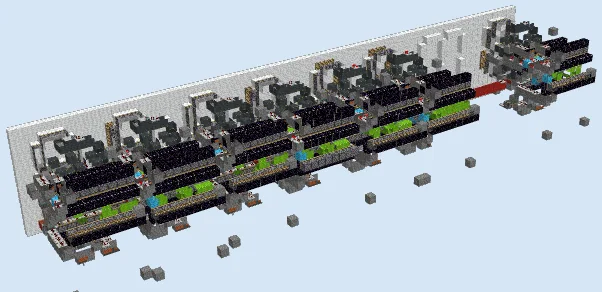
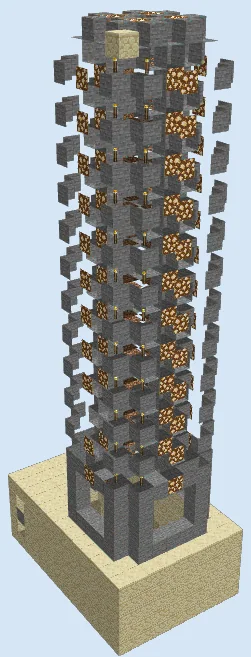
The Compact Redstone Countdown Timer Machine is a dedicated logic apparatus designed to cycle numbers from nine down to zero on an integrated lamp display. Whether you need a sequence timer for minigame arenas, an ignition countdown for TNT cannons, or an automated event trigger, this self-contained unit packages complex binary and pulse logic into a structured footprint.
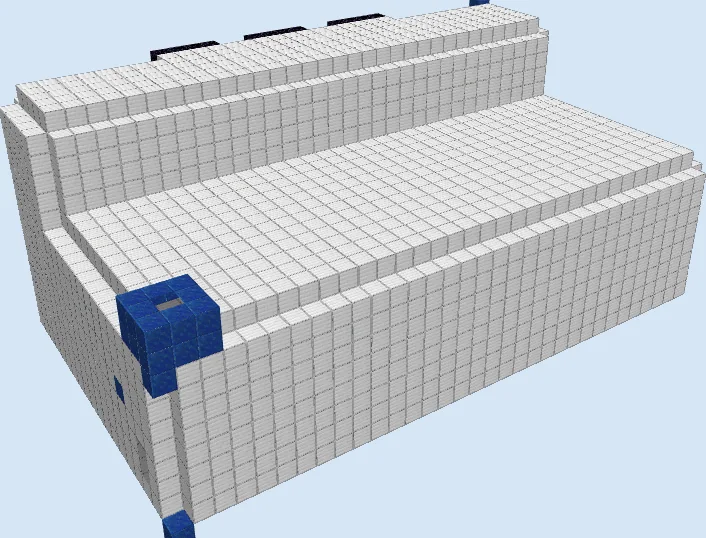
Because the machine is entirely enclosed within a clean iron and lapis shell, it can be built directly into the floor or wall of a base, control room, or minigame hub. The underlying redstone mechanics rely on principles that have stayed the same for years, though you should always test the unit in a creative world before committing survival resources.
Iron blocks can be substituted with any solid opaque block, such as smooth stone or colored concrete, to lower construction costs without affecting redstone conductivity.
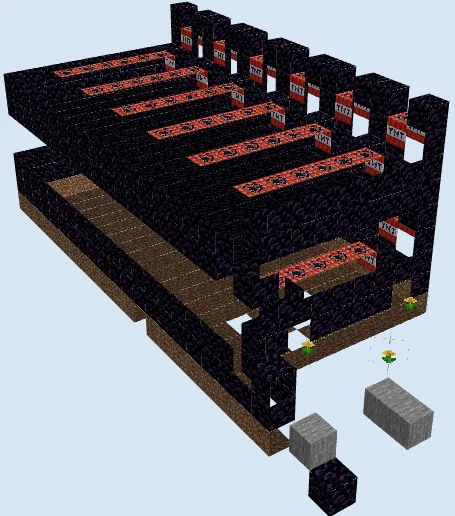
Do not replace the obsidian blocks with ordinary building blocks, as pistons will push them out of alignment and jam the entire clock mechanism.
Materials 4,260 blocks · 20 types
- Iron Block2,24735 stacks + 7
- Lapis Block86513 stacks + 33
- Redstone Wire3485 stacks + 28
- Repeater1712 stacks + 43
- Obsidian1081 stack + 44
- Piston961 stack + 32
- Glass931 stack + 29
- Redstone Torch891 stack + 25
- Bricks661 stack + 2
- Oak Wall Sign48
- Stone48
- Redstone Lamp42
- Torch16
- Oak Sign6
- Sticky Piston6
- Iron Door4
- Stone Button4
- Diamond Block1
- Lever1
- Daylight Detector1
How it works
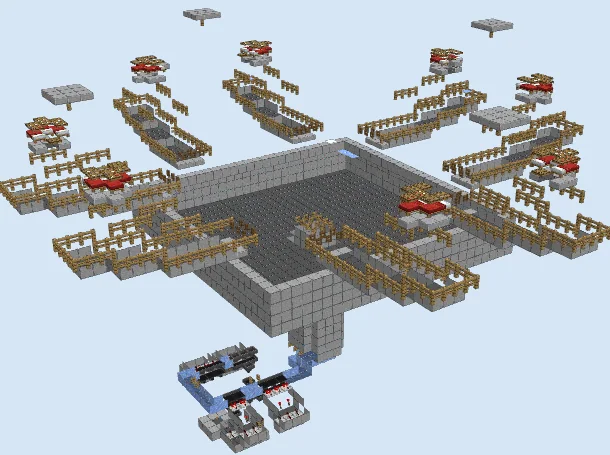
The core mechanism uses an array of pistons, redstone repeaters, and redstone torches laid along color-coded lapis and iron channels. When triggered by a stone button, lever, or daylight detector, a central pulse clock steps through sequential states. Each step shifts the active redstone line, routing current through a physical decoder made of solid blocks and redstone torches.
This decoding matrix dictates which segment lines energize, directly toggling the redstone lamps on the display face to depict each digit from 9 to 0. Obsidian blocks are positioned at key piston stroke limits to prevent push limits from breaking adjacent circuits, ensuring the cycling logic resets cleanly upon reaching zero.
How to use it
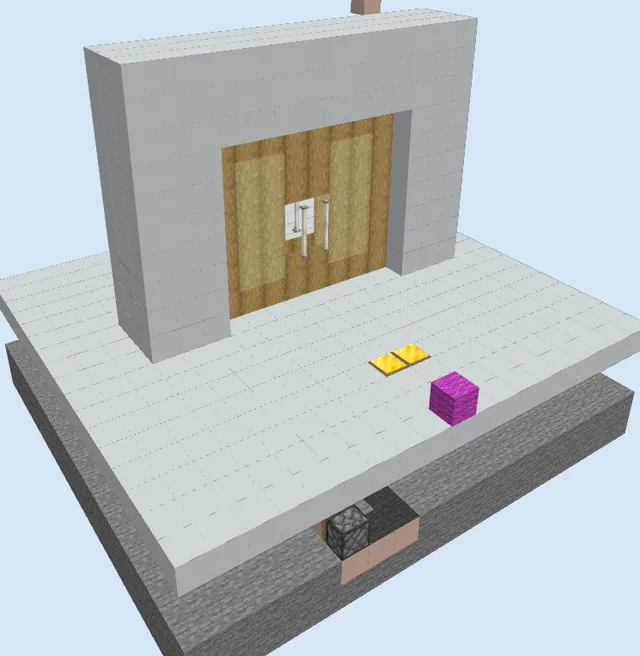
To operate the timer, press the primary stone button or flick the lever located at the control interface. The internal clock will begin stepping down through the digits automatically. If connected to an external mechanism via the final zero-signal output, the machine can trigger doors, dispensers, or alarms when the counter completes its sequence.
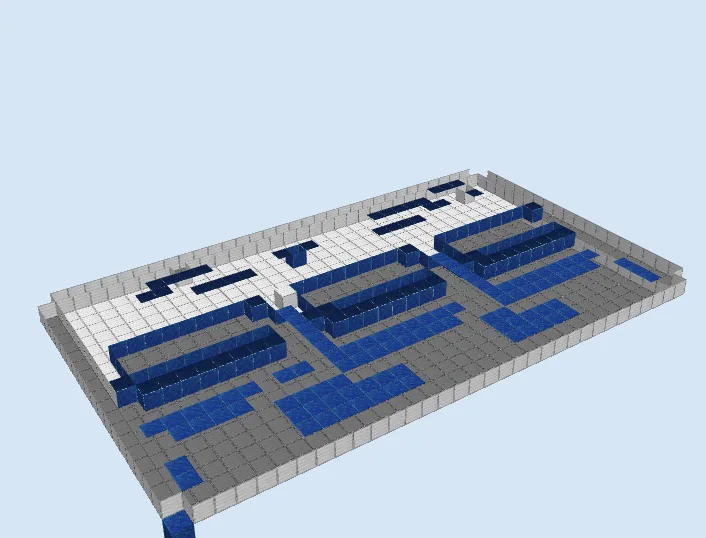
Lay the Foundation and Grid Layout
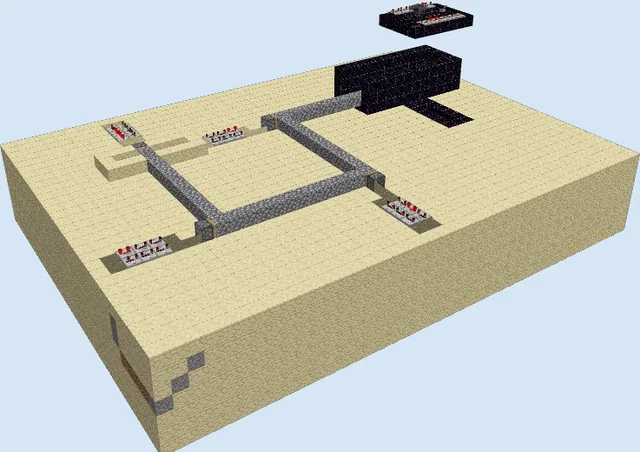
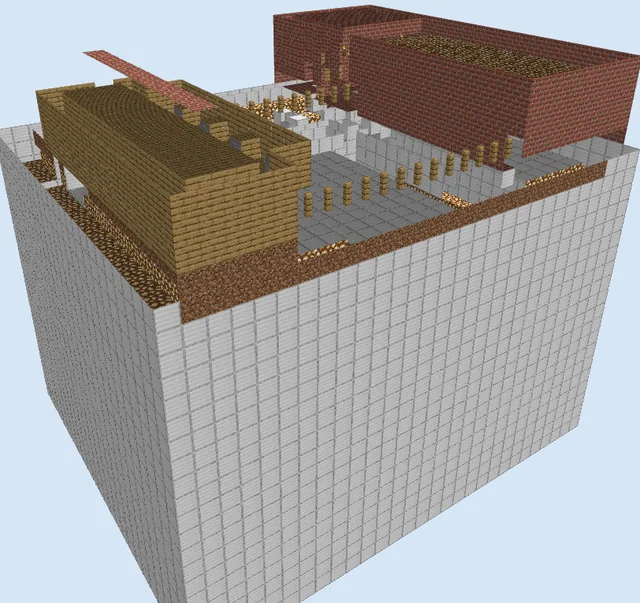
Layers 1–2 of 15Clear a level area measuring 34 by 21 blocks. Outline the foundation using iron blocks, and inlay lapis blocks along the channels to map out the lower signal paths and display lines as shown in the floor plan.
Install Lower Logic and Piston Channels
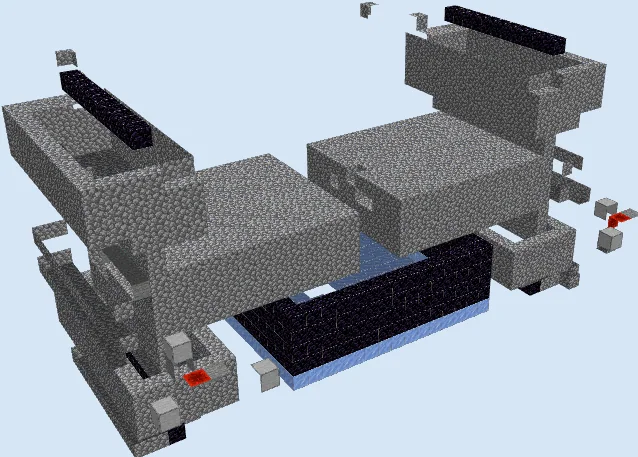
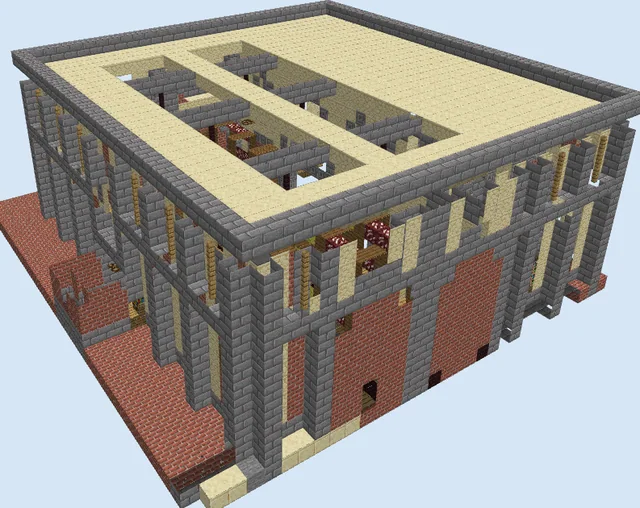
Layers 3–6 of 15Raise the outer perimeter walls with iron blocks up to layer 6. Inside, construct the lower decoder bus using lapis blocks, bricks, and regular pistons, wiring the bottom layer with redstone wire and repeaters to establish the timing tracks.
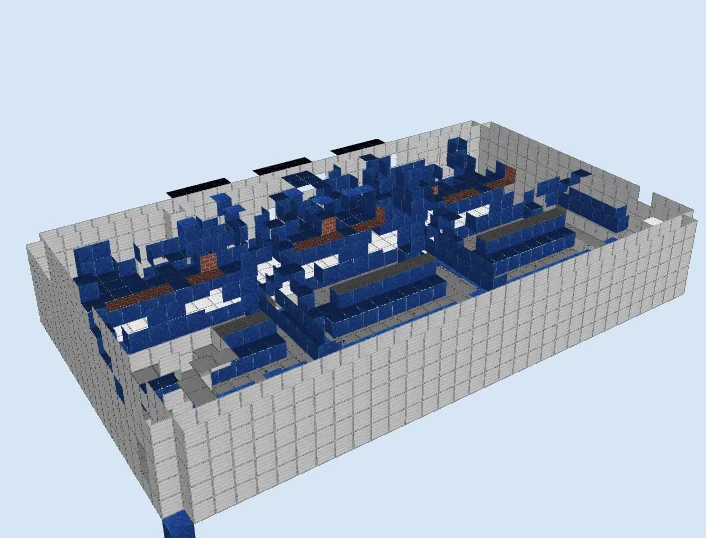
Assemble Decoder Towers and Obsidian Stops
Layers 7–11 of 15Build the vertical circuitry upward through layer 11. Place redstone torches along the lapis and brick uprights to form the segment inverter matrix, install the sticky pistons, and set obsidian stopper blocks along the rear piston banks to constrain movement.
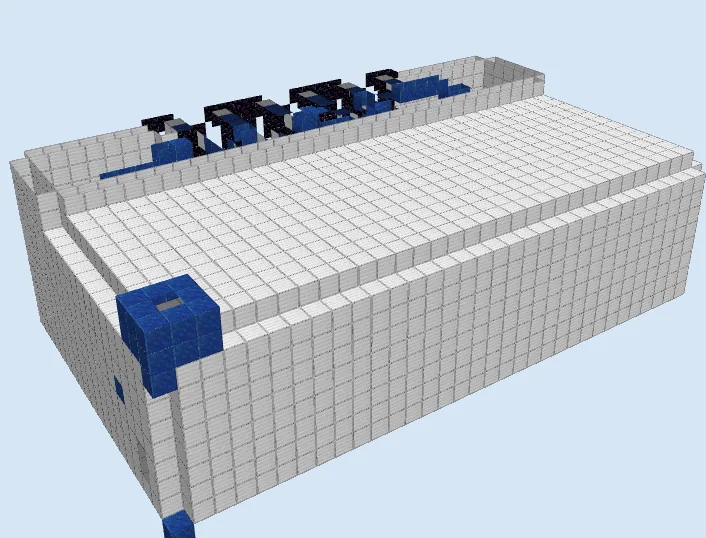
Enclose the Chassis and Finish the Roof
Layers 12–15 of 15Complete the remaining internal connections leading to the redstone lamp face. Seal the top of the machine using iron blocks, placing the final lapis accents and obsidian reinforcement along the upper perimeter to protect the wiring.
Finishing touches
Before sealing the roof completely, trigger the input button and observe the cycle from 9 to 0 to verify that every repeater delay is identical and no pistons stick. Ensure the interior is lit with torches to prevent hostile mobs from spawning inside the circuits and disrupting signal lines.
Frequently Asked Questions
Can I adjust the countdown speed?
Yes, increasing or decreasing the delay on the primary repeaters in the master clock track will alter the time spent on each individual digit.
Does this design work across updates?
This kind of redstone machine relies on fundamental piston and repeater mechanics that have stayed consistent across game versions, but testing it in a creative world first is always recommended.