What you are building
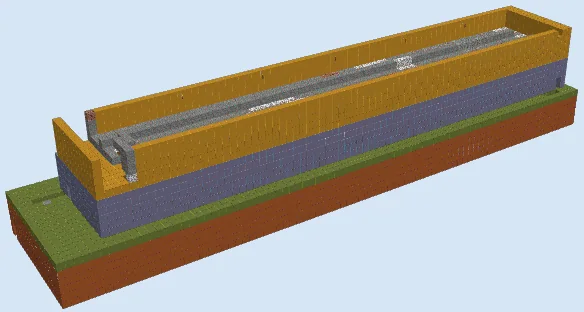
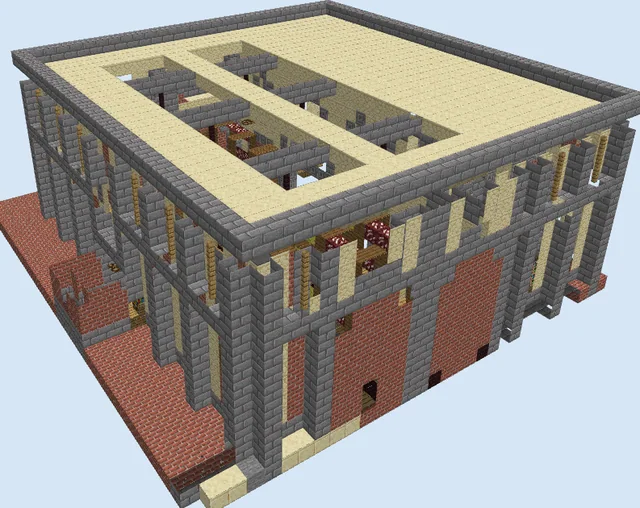
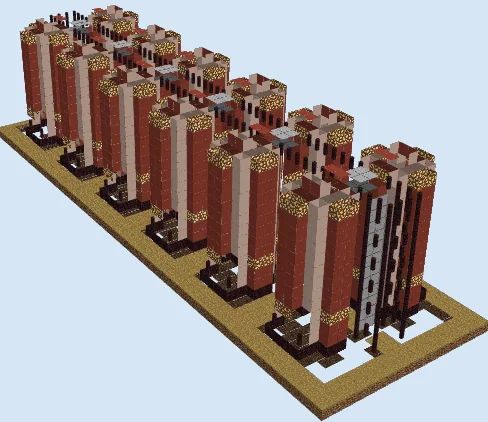
High-volume resource gathering requires dedicated bulk storage, and this multi-tower silo complex provides an immense amount of container capacity. Laid out across twelve freestanding vertical towers arranged in two parallel rows, each silo houses vertical stacks of alternating standard and trapped chests fed by continuous hopper columns.
Constructed from red and white terracotta, nether brick supports, and integrated glowstone rings, this design doubles as an eye-catching industrial facility. It serves as an ideal bulk depot near automated quarries, extensive tree farms, or main survival sorting hubs.
Materials 4,654 blocks · 17 types
- Red Terracotta96215 stacks + 2
- White Terracotta6249 stacks + 48
- Dirt Path5608 stacks + 48
- Dirt3144 stacks + 58
- Nether Bricks3124 stacks + 56
- Nether Brick Slab2884 stacks + 32
- Chest2644 stacks + 8
- Nether Brick Fence2543 stacks + 62
- Hopper2523 stacks + 60
- Glowstone1923 stacks
- Grass Block1702 stacks + 42
- Nether Brick Stairs1442 stacks + 16
- Trapped Chest961 stack + 32
- Stone Slab781 stack + 14
- Smooth Stone721 stack + 8
- Ladder48
- Oak Trapdoor24
How it works
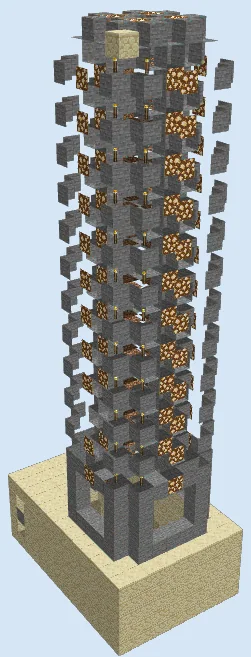
Each silo operates as a vertical gravity buffer. Items dropped into the top hoppers flow downward through the tower core into stacked rows of alternating chests and trapped chests. Interleaving trapped chests with standard chests prevents adjacent containers from joining together, allowing double chests to sit directly beside one another in a dense cylindrical footprint.
As items filter into the system, the bottom chests fill up first. Once the lower containers reach maximum capacity, the pipeline backs up into the tiers above, fully utilizing the tower's height. Built-in ladders, smooth stone pillars, and stone slab walkways along the central aisle allow quick manual access to all vertical levels.
How to use it
Deposit bulk materials into the top input hoppers or upper chests, allowing gravity to funnel the items down into the base containers. To retrieve supplies, walk through the ground-level nether brick colonnade to access the bottom chests, or climb the central service ladders to inspect and withdraw items stored in the higher tiers.
Lay the Foundation and Tower Bases
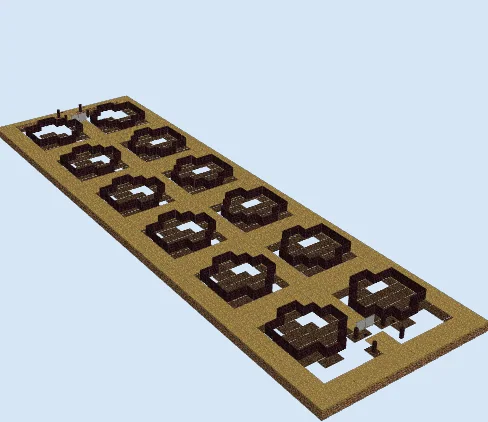
Layers 1–2 of 15Outline the perimeter using Dirt Path, Dirt, and Grass Blocks to frame the entire building footprint. Form the twelve silo bases in two parallel rows of six using Nether Bricks, Nether Brick Stairs, and Nether Brick Slabs.
Position the lowest tier of Chests, Trapped Chests, and downward-facing Hoppers within the center of each foundation pad to establish the retrieval points.
Raise the Lower Silo Shells
Layers 3–6 of 15Construct the lower walls around each silo footprint using Red Terracotta and White Terracotta, securing the external corners with vertical Nether Brick Fence posts. Insert a ring of Glowstone around each base to illuminate the walkways.
Continue stacking alternating Chests and Trapped Chests inside each silo core, connecting them with hoppers while leaving space for container lids to open unobstructed.
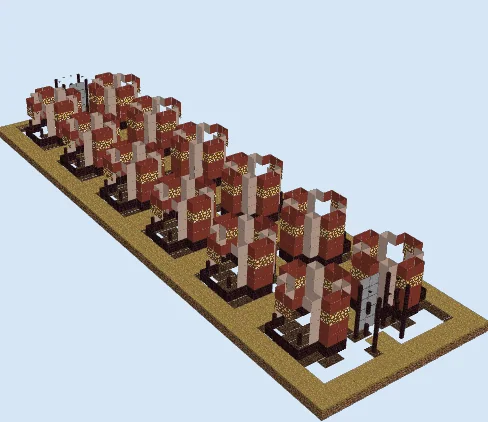
Extend Walls and Central Walkway
Layers 7–11 of 15Extend the tower shafts upward by building tall vertical columns of Red Terracotta contrasted by central ribs of White Terracotta. Continue extending the interior hopper and chest columns level by level.
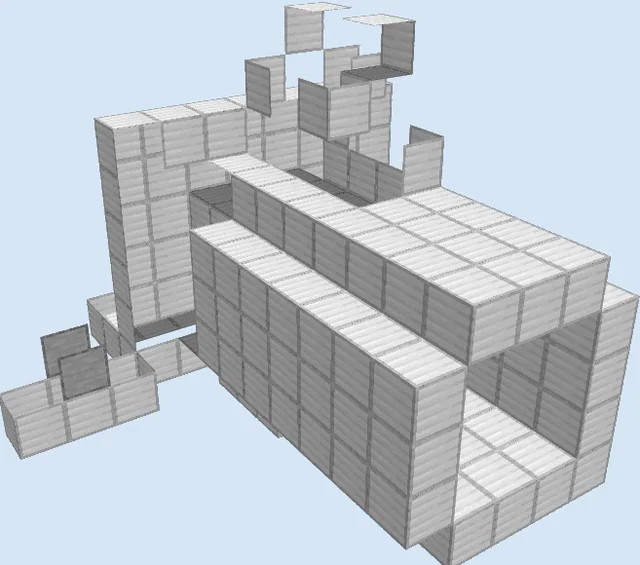
Begin mounting Smooth Stone pillars and Ladders along the central aisle between the two silo rows to create the vertical maintenance corridor.
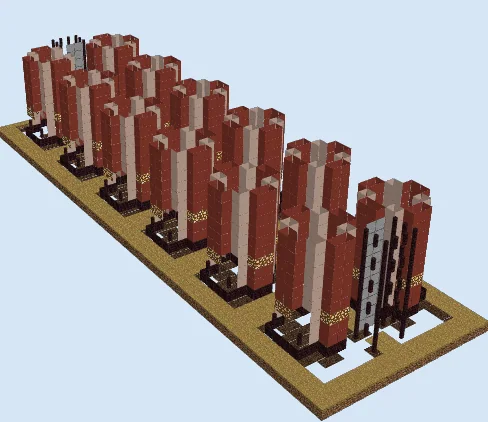
Cap the Silos and Finish Catwalks
Layers 12–15 of 15Complete the upper rims of all twelve towers with a crown of Glowstone, trimmed with Nether Bricks and Nether Brick Slabs. Bridge the towers across the central aisle with Stone Slabs to form overhead inspection catwalks.
Install Oak Trapdoors over ladder access shafts and verify that all top-tier hoppers are oriented downward to accept incoming item deliveries.
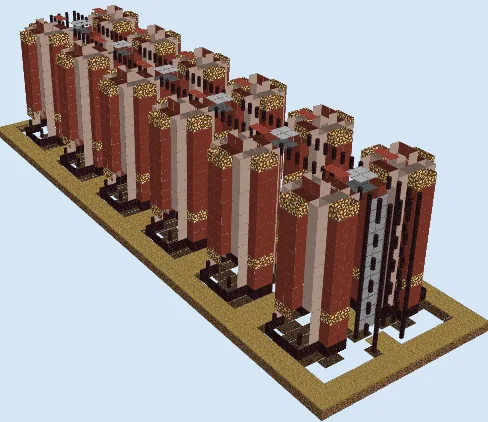
Finishing touches
Test the storage facility by tossing several stacks of items into the topmost hopper of each silo to confirm that blocks flow smoothly all the way down to the lowest chests. Ensure that blocks resting directly above chests do not prevent container lids from opening freely.
Frequently Asked Questions
Why are trapped chests mixed with regular chests?
Alternating regular chests and trapped chests allows you to place double chests directly next to each other without them accidentally merging into mismatched horizontal containers.
Can I connect this build to an automated item sorter?
Yes. You can route an overhead water stream or item transport line across the top catwalks to drop filtered items directly into each silo's topmost hopper.