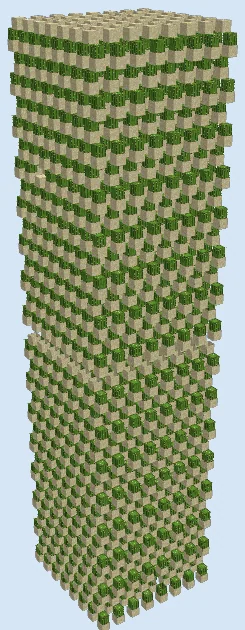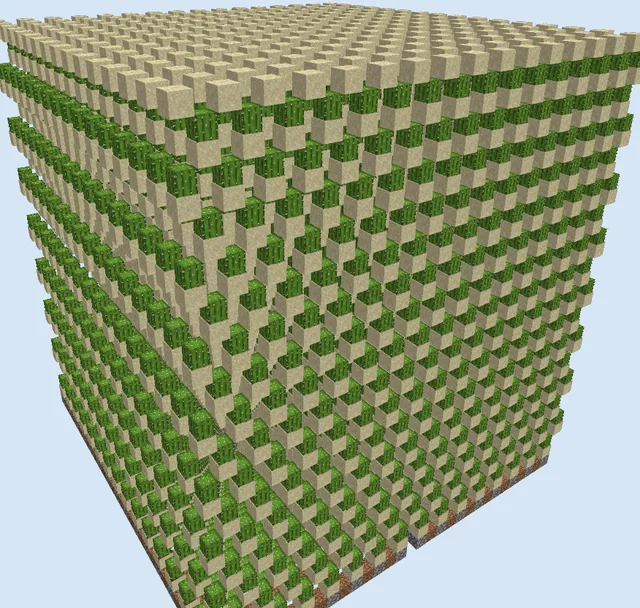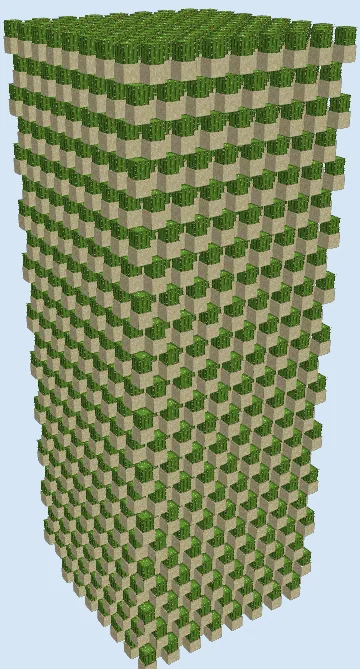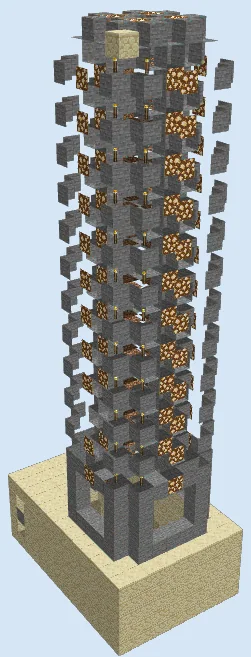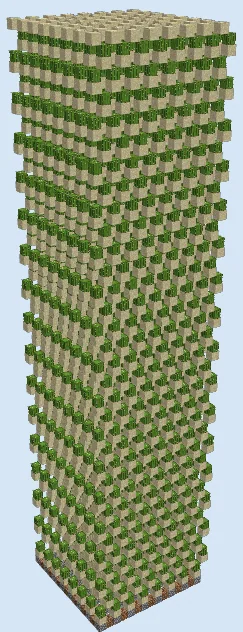
What you are building
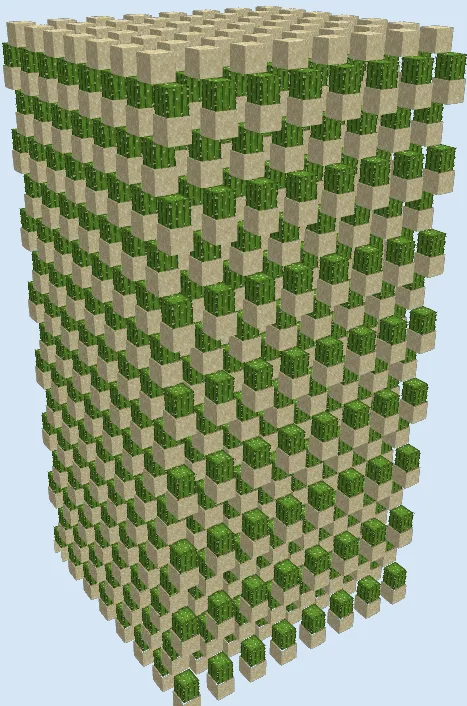
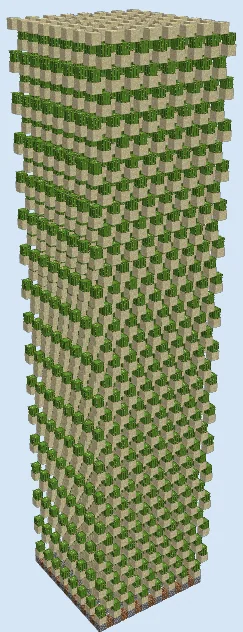
This tall vertical cactus farm packs over two thousand cactus plants into a tight 16 by 15 footprint. By stacking layers upward to 66 blocks high, it produces a steady supply of cactus for green dye, smelting XP, or bone meal composting without taking up much ground space.
The build uses only five basic block types: sand, cactus, tripwire string, dirt, and cobblestone. Because the file comes from an older version of Java Edition, you should test the string support interaction in a creative world first before gathering all the materials in survival.
Test the sand-on-string placement mechanic in a creative world first, as block support rules for tripwire string and cactus can vary depending on how you place the blocks.
Build a wider perimeter wall and water streams around the 16 by 15 base before stacking all 66 layers, because cactus items often pop out sideways from the outer edges of the tower.
Materials 6,343 blocks · 5 types
- Sand2,11233 stacks
- Tripwire2,04932 stacks + 1
- Cactus2,04832 stacks
- Dirt701 stack + 6
- Cobblestone641 stack
How it works
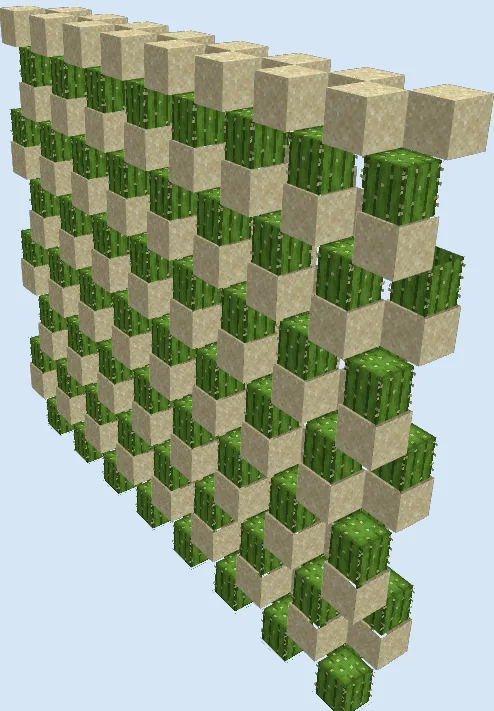
Cactus blocks break automatically whenever a block occupies the space directly adjacent to them. In this design, tripwire string is placed between the growing columns to both support the next layer of sand and update the cactus as it grows.
When a cactus plant grows to its second block, it triggers an update and pops off immediately as an item. The dropped items fall down through the open gaps in the checkerboard grid toward the bottom of the tower.
How to use it
This farm runs passively on its own whenever you are standing within random tick range of the chunk. Simply stay nearby while working on other projects and collect the fallen cactus drops around and beneath the base of the tower.
Build the Base and Lower Layers
Layers 1–10 of 66Start by laying out the 16 by 15 foundation grid on the ground using the 70 Dirt and 64 Cobblestone blocks in a checkerboard pattern. Place your first layer of Sand on top of the base blocks and plant Cactus on each sand block.
Place Tripwire string in the empty spaces next to the cactus tops to support the next level of sand. Repeat this alternating pattern of sand, cactus, and string up to layer 10.
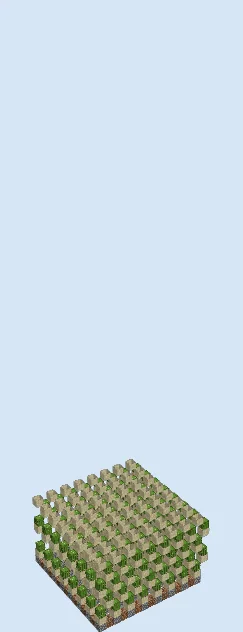
Extend the Tower to Layer 28
Layers 11–28 of 66Continue stacking the exact same checkerboard layers upward from layer 11 to layer 28. Each level needs Tripwire string placed adjacent to the cactus level so you can set the next grid of Sand directly on top of the string and cactus.
Plant Cactus on every new sand block as you go up, making sure no two cacti are placed directly next to a solid block on the same horizontal plane until they grow.
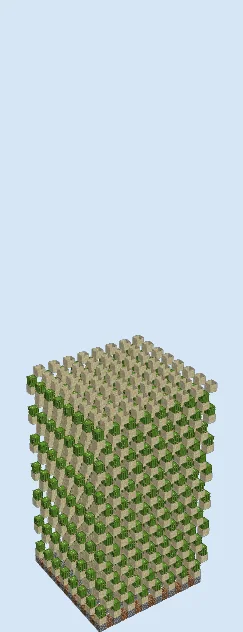
Stack Up to Layer 48
Layers 29–48 of 66Keep repeating the vertical grid pattern from layer 29 up to layer 48. At this point you will have used a large portion of your Sand, Cactus, and Tripwire supplies.
Work carefully one layer at a time so you do not miss any string placements inside the interior columns, as reaching back inside the grid later is difficult.
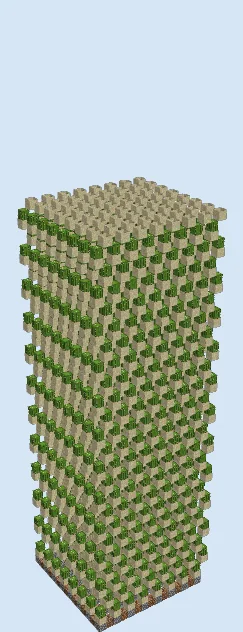
Complete the Top Layers
Layers 49–66 of 66Finish the final stretch of the tower from layer 49 up to the top cap at layer 66. Complete the remaining rows of Cactus and Tripwire string, then cap the very top of the structure with the final checkerboard grid of Sand blocks.
Finishing touches
Once the tower is complete, watch the sides for a minute to confirm that growing cacti immediately break and drop down. Keep in mind that this schematic only includes the harvesting tower itself, so you will want to add your own water stream or hopper collection floor around the dirt and cobblestone base to catch every drop.
Frequently Asked Questions
Does this build include an item collection system?
No, the schematic only contains the dirt and cobblestone foundation along with the sand, cactus, and tripwire tower, so you should build a water stream floor underneath or around the base to gather the drops.
Why does the farm use so much tripwire string?
The 2,049 pieces of tripwire string act as compact spacer blocks that break the cactus upon growth and allow vertical stacking without bulky fence posts or stone walls.