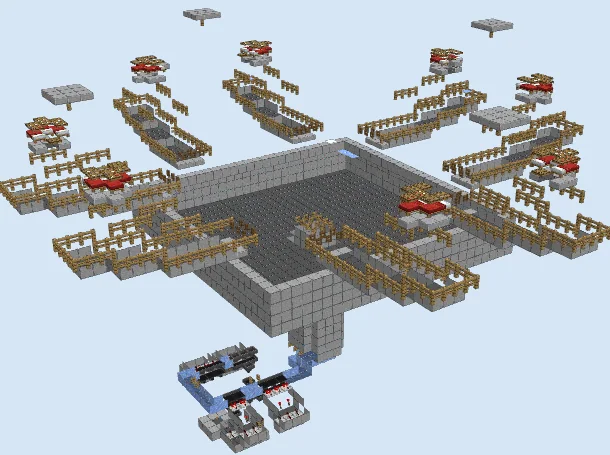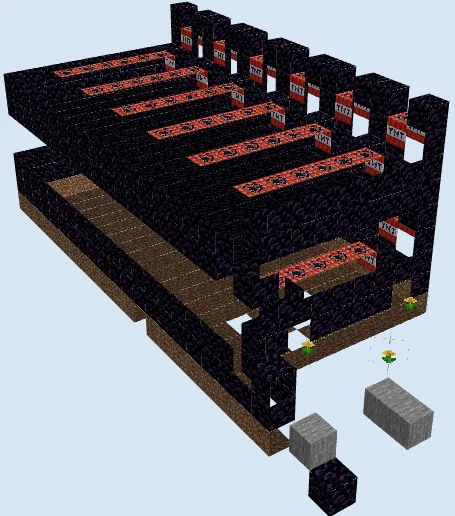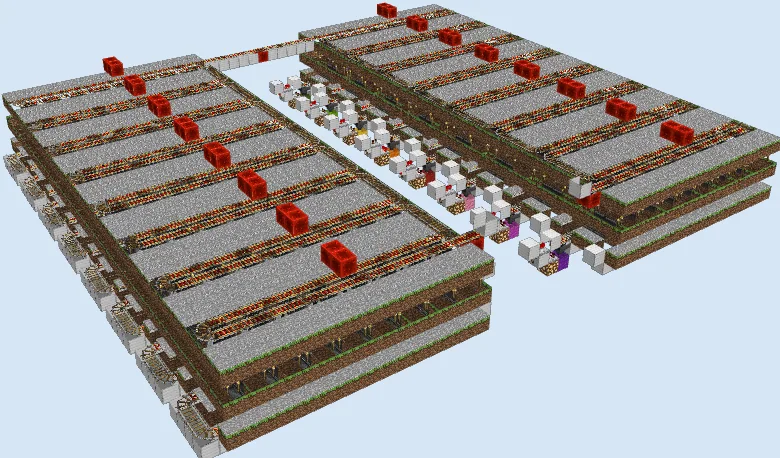
What you are building
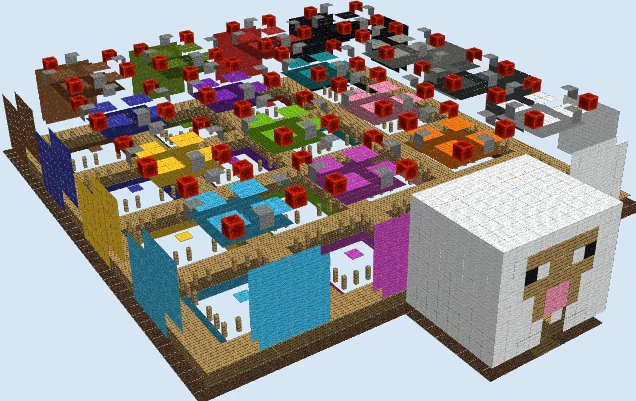
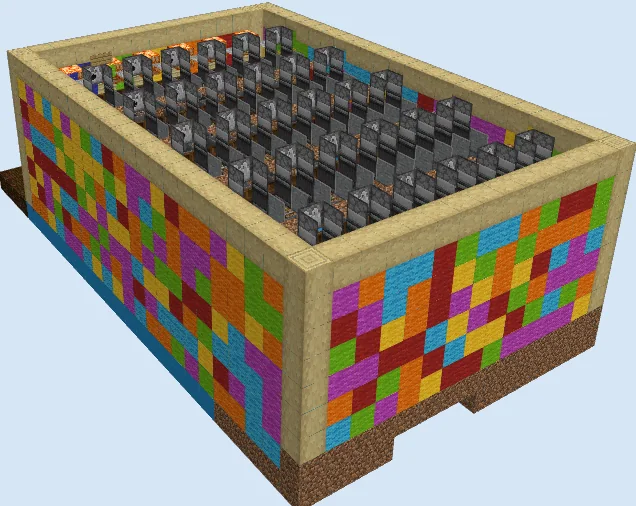
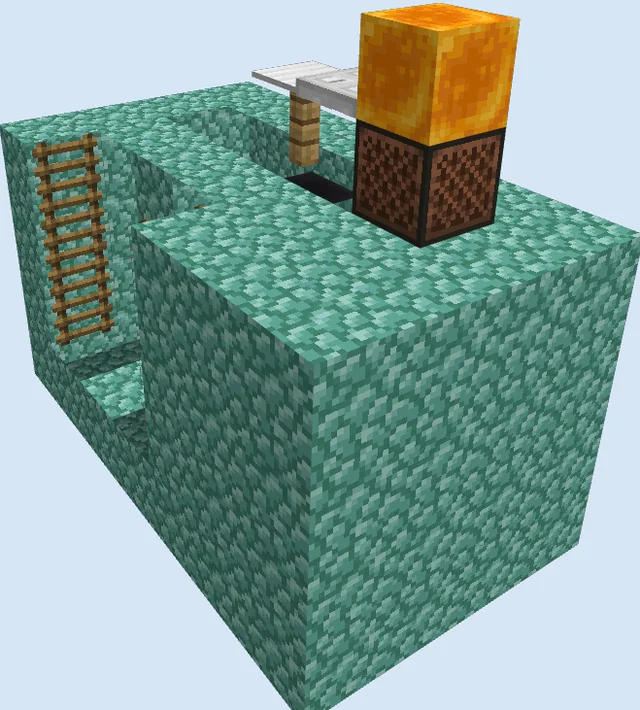
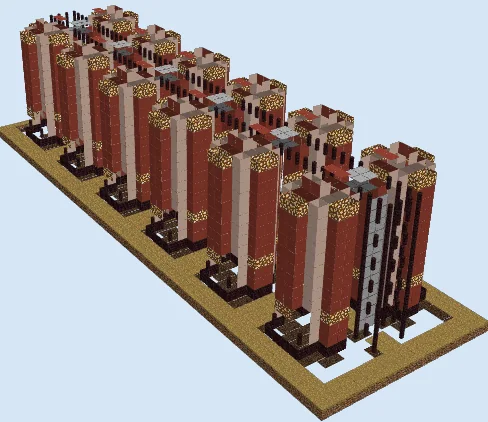
This large modular wool farm is split into two symmetrical wings of eight lanes each, giving you 16 separate color modules in a 47 by 41 block footprint. According to the source, the full array is rated for 16,000 wool per hour when fully stocked with sheep and shears.
Because it relies on grass regrowth, build it in a well-lit area or enclose it securely so hostile mobs cannot spawn on the tracks or inside the central walkway. While the file was saved in Java Edition 1.16.4, observer and dispenser shearing mechanics have remained unchanged for years; you should still test it in a creative world before committing resources in survival.
Let the grass spread first: Make sure all dirt blocks have turned into grass blocks before putting sheep into the pens, otherwise a sheep can eat the only grass block nearby and stall the cell.
Stock up on iron for shears: With 256 dispensers across the farm, you will need a large supply of shears to fill every slot for long automated runs.
Materials 7,074 blocks · 32 types
- Grass Block2,74442 stacks + 56
- Powered Rail1,04116 stacks + 17
- Torch70611 stacks + 2
- Iron Block65210 stacks + 12
- Observer5128 stacks
- Glass4326 stacks + 48
- Hopper2724 stacks + 16
- Dispenser2564 stacks
- Rail1822 stacks + 54
- Dirt1261 stack + 62
- Redstone Block671 stack + 3
- Glowstone16
- Comparator16
- Redstone Wall Torch16
- Repeater16
- Chest4
- Cyan Wool1
- Green Wool1
- Light Blue Wool1
- Lime Wool1
- Blue Wool1
- Yellow Wool1
- Brown Wool1
- Orange Wool1
- White Wool1
- Red Wool1
- Light Gray Wool1
- Pink Wool1
- Gray Wool1
- Magenta Wool1
- Black Wool1
- Purple Wool1
How it works
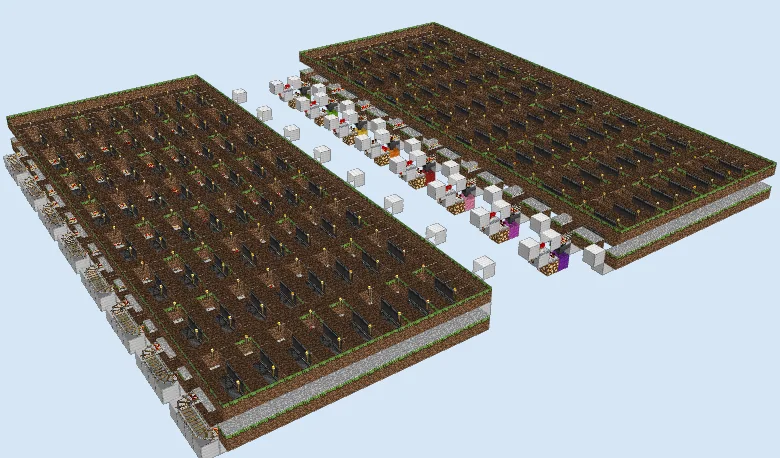
Each of the 256 shearing cells holds sheep over a grass block surrounded by extra grass blocks and torches to encourage rapid grass regrowth. An observer watches the grass block underneath the sheep; whenever a sheep eats the grass to regrow its fleece, the observer detects the block state change and triggers a dispenser loaded with shears to harvest the wool immediately.
Long loops of powered rails and standard rails energized by redstone blocks run underneath the grass floors and along the top deck. Hopper minecarts traveling along these tracks pick up the sheared wool through the grass blocks and unload it into the central row of hoppers, which are monitored by comparators, repeaters, and redstone wall torches at the color-coded stations in the middle aisle.
How to use it
To run the farm, stock every dispenser with shears, place dyed sheep into the glass-walled cells according to the colored wool markers in the central aisle, and set hopper minecarts running along the rail loops. Stand within simulation distance so the grass continues to tick and regrow, and periodically check the central chests and hoppers to collect your harvested wool and refill worn-out shears.
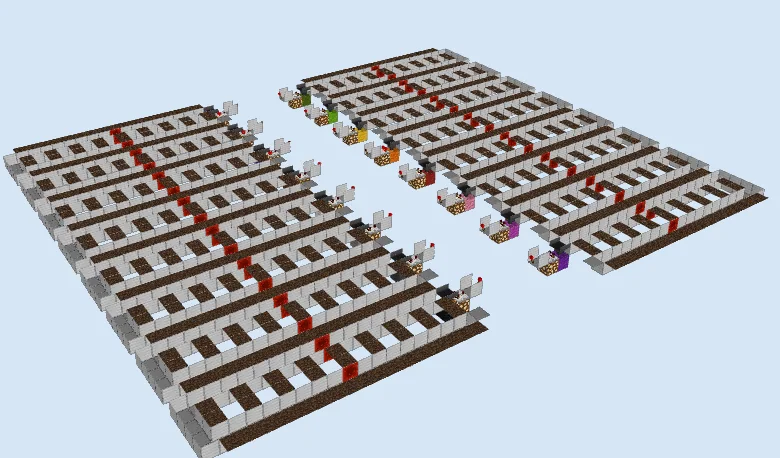
Lay the Bottom Tracks and Unloading Stations
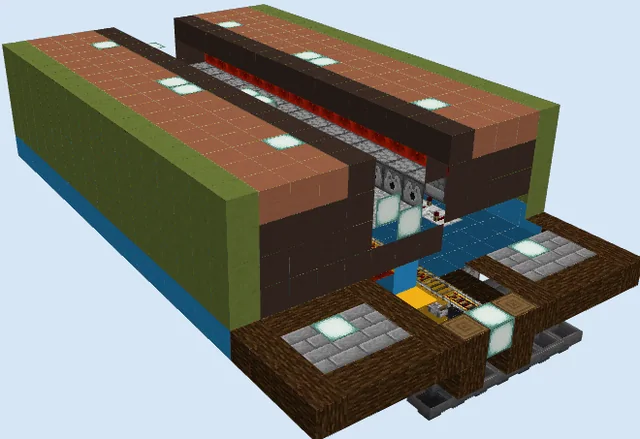
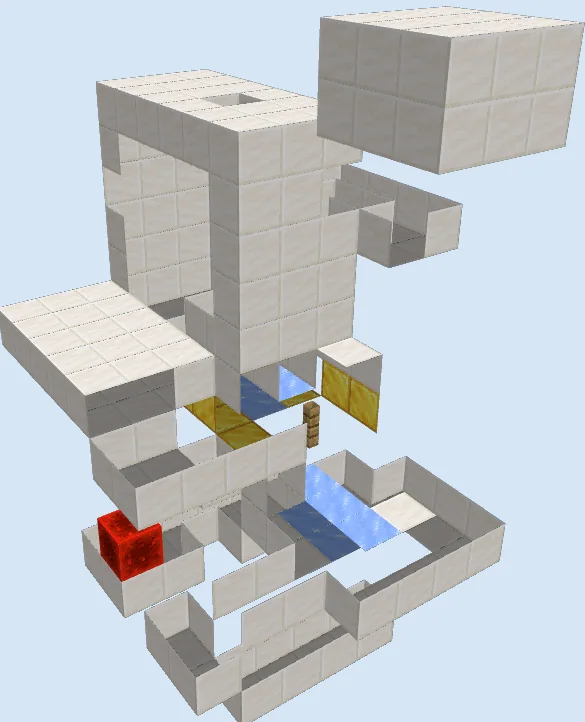
Layers 1–2 of 9Start by laying out the two parallel wings of dirt and grass block strips separated by a central aisle. Along the bottom level, build the 16 color-coded unloading stations in the center using iron blocks, glowstone, colored wool markers, hoppers, comparators, repeaters, and redstone wall torches.
Run lines of powered rails and curved standard rails across the lower floor of each lane, placing redstone blocks down the center of each wing to keep the tracks permanently powered.
Build the Grass Decks and Shearing Cells
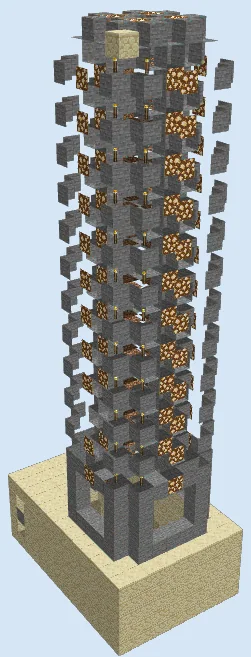
Layers 3–5 of 9Construct the main sheep floor above the bottom tracks using rows of grass blocks and dirt, leaving openings for the 256 individual cells. Place observers and upward- or inward-facing dispensers at each cell position, and line the chambers with glass blocks to keep the sheep contained.
Place torches across the grass grid so the grass blocks have plenty of light to spread back into the dirt patches after the sheep graze. Add the outer iron block turnarounds with curved rails and the second tier of hopper unloading circuits along the central corridor.
Install the Upper Roof and Top Rail Loops
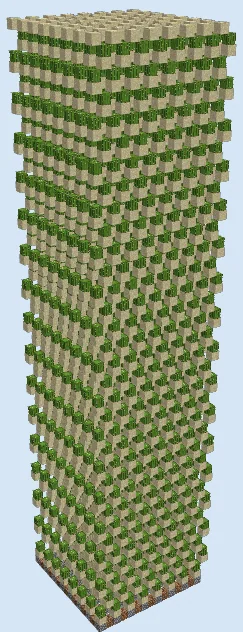
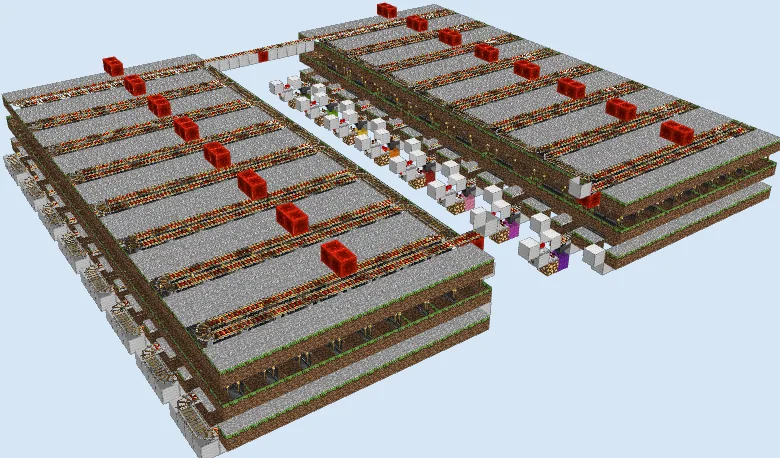
Layers 6–9 of 9Cap the sheep cells with a top layer of grass blocks and glass so the animals cannot escape and so every cell has adjacent grass ready to spread. On top of this roof, lay down the upper network of powered rails and standard rails in long back-and-forth loops across all 16 lanes.
Place pairs of redstone blocks along the middle of the top tracks to power the upper rail lines, and build the narrow iron-and-redstone-block bridge connecting the two wings at the back.
Finishing touches
Before loading sheep into the cells, verify that every grass patch has connected to live grass and that all 706 torches are placed so the interior stays bright enough for rapid regrowth even at night. Run a test minecart along each of the 16 rail lanes to make sure every powered rail section is active and that carts unload cleanly at the central comparator stations without getting stuck on corners.
Frequently Asked Questions
Why are there torches all over the inside of the farm?
Grass blocks require a light level of 9 or higher above them in order to spread onto adjacent dirt blocks, so the torches keep the farm working day and night while preventing hostile mobs from spawning.
How does the wool get collected through solid grass blocks?
Hopper minecarts rolling on the rails directly beneath the grass floor can pull dropped wool items right through a full block above them and carry the drops to the central hoppers.
Does this wool farm work in newer versions of the game?
Although the file was saved in 1.16.4, the core mechanics of observers detecting eaten grass and dispensers shearing sheep have not changed, though you should test it in a creative world first.