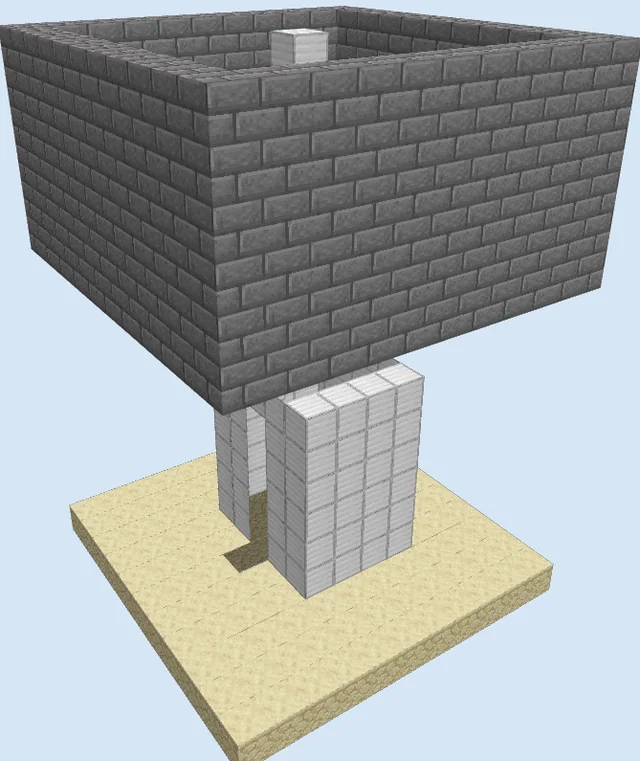
What you are building
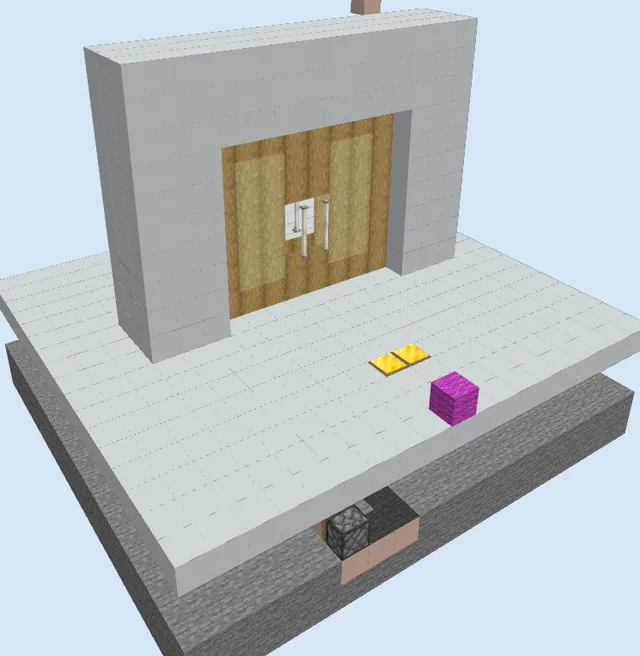
The Three by One Sliding Glass Piston Door provides a sleek, modern entryway for secret passages, laboratories, or high-end survival bases. Instead of using solid opaque blocks, this design powers and retracts glass blocks cleanly without leaving exposed wiring visible through the entryway portal.
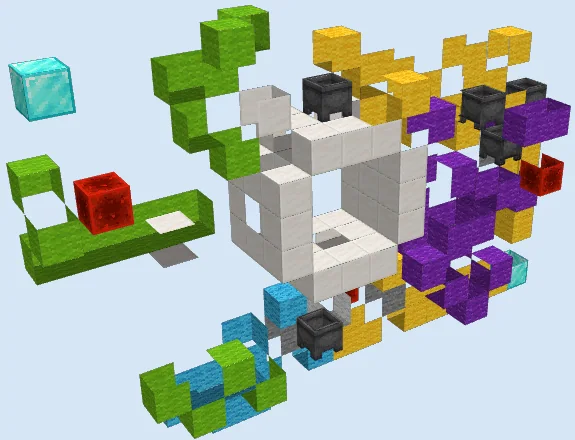
Constructed around an 18x12x4 footprint, the build uses color-coded wool blocks to separate different timing channels and piston extension stages. It is ideal to embed inside an interior wall or subterranean bunker where clean aesthetics and seamless opening animations are desired.
Make sure to fill each cauldron with water before powering the machine, as the comparators rely on cauldron fill levels to output correct signal strengths.
Keep the color-coded wool intact during construction; it makes tracing repeaters and fixing timing desyncs much easier if a piston jams.
Materials 255 blocks · 20 types
- Redstone Wire41
- Quartz Block38
- Purple Wool30
- Yellow Wool27
- Repeater22
- Lime Wool17
- Sticky Piston15
- Piston12
- Light Blue Wool10
- Sandstone Slab8
- Redstone Torch7
- Comparator5
- Cauldron5
- Oak Wall Sign5
- Stone3
- Redstone Block3
- Glass3
- Diamond Block2
- White Wool1
- Lever1
How it works
The mechanism relies on synchronized sticky pistons and regular pistons to slide glass blocks across the central quartz frame. When the lever toggles the input line, redstone signals travel through multi-stage repeater delay lines routed across purple, yellow, and lime wool wiring paths.
Water-filled cauldrons paired with comparators provide steady signal strength levels to manage pulse lengths without excessive bulk. Redstone blocks and torches alternate power states, ensuring the pistons fire in the exact sequence required to pull the glass aside on opening and push it flush into the frame upon closing.
How to use it
Place the input lever at the designated control block on the green wool input line. Flip the lever to cycle the door open or closed, ensuring you allow the full piston extension and retraction cycle to complete before toggling it again.
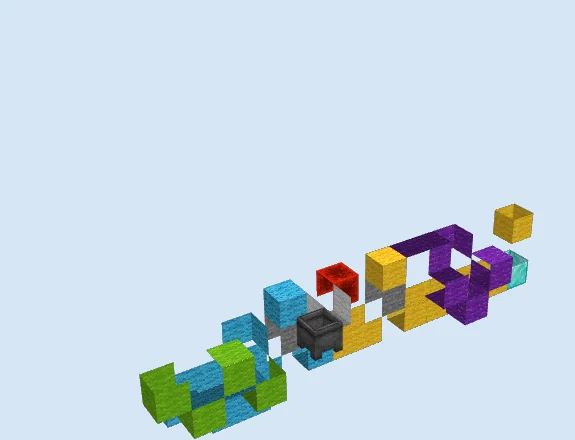
Lay the Subfloor Wiring and Base Circuits
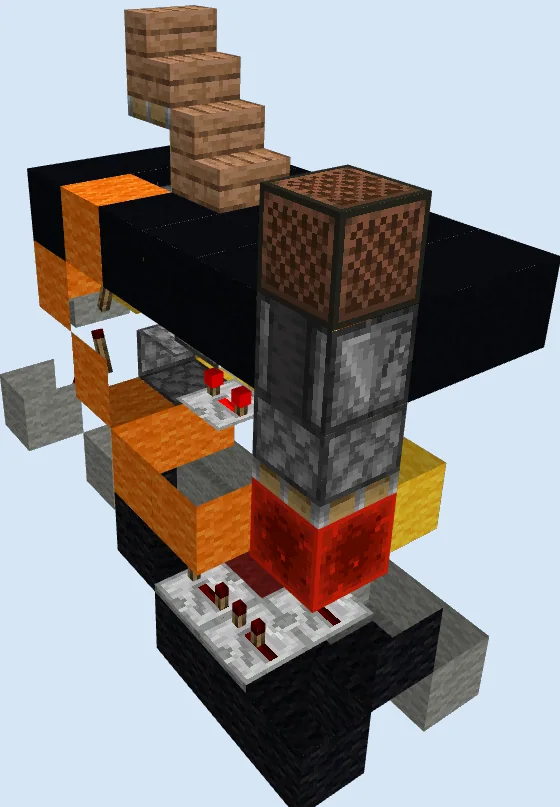
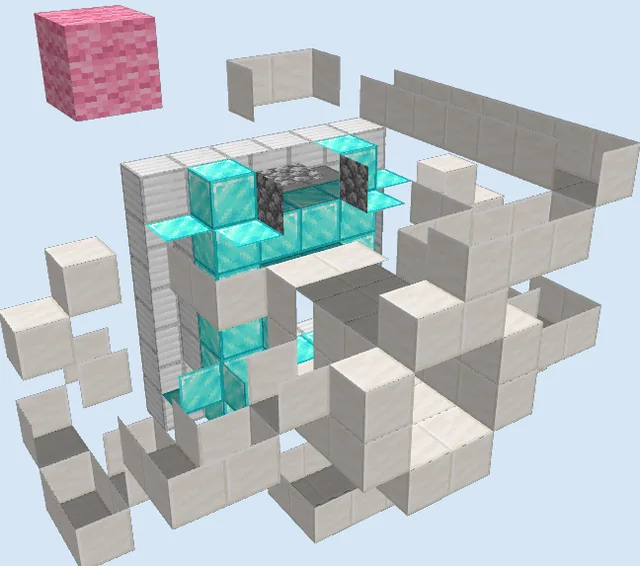
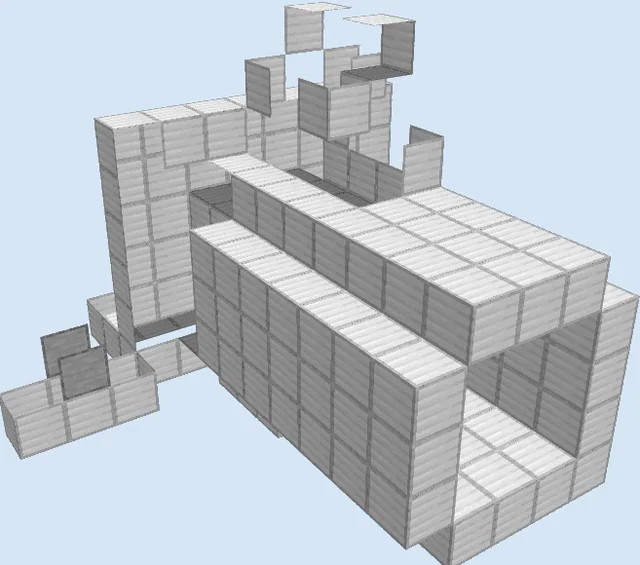
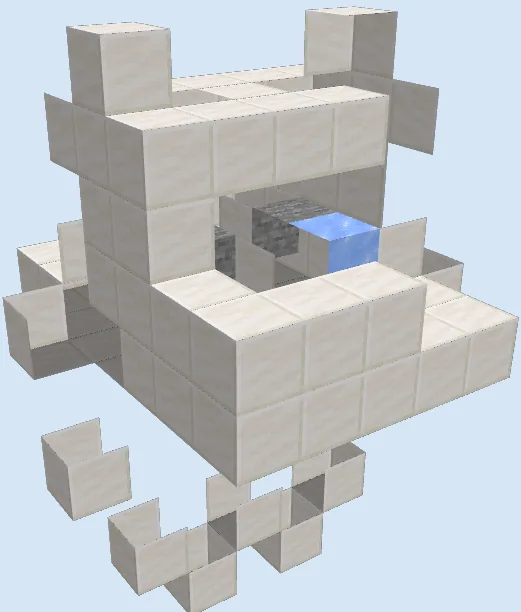
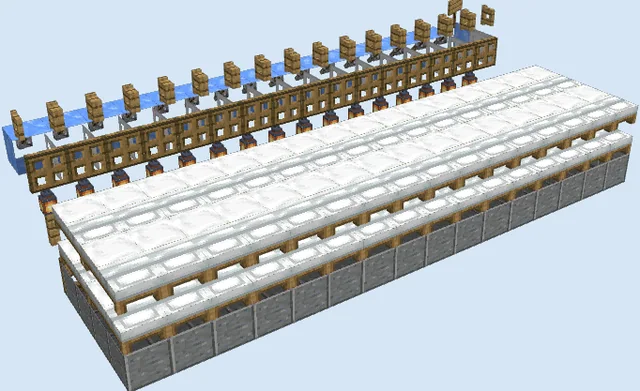
Layers 1–3 of 12Begin by laying down the lowest three layers of colored wool to form the base signal paths. Place light blue and lime wool on the lower-left side, and arrange yellow and purple wool along the bottom-right channel, using diamond blocks to mark boundary corners.
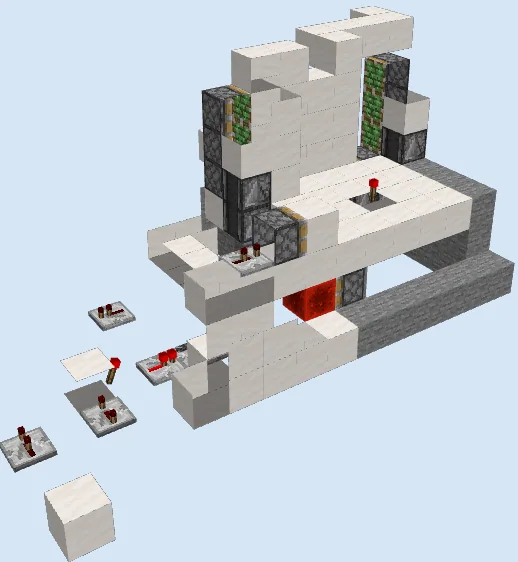
Mount your first redstone block, repeaters, and redstone dust along the wool runs. Position the lowest cauldron and run a comparator out from it to establish the baseline signal power for the lower retraction pistons.
Erect the Portal Base and Side Extensions
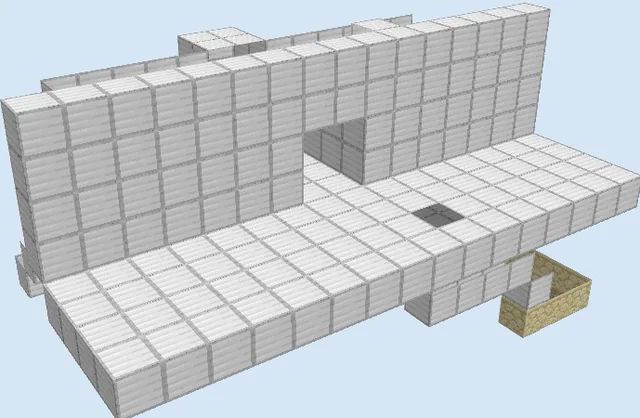
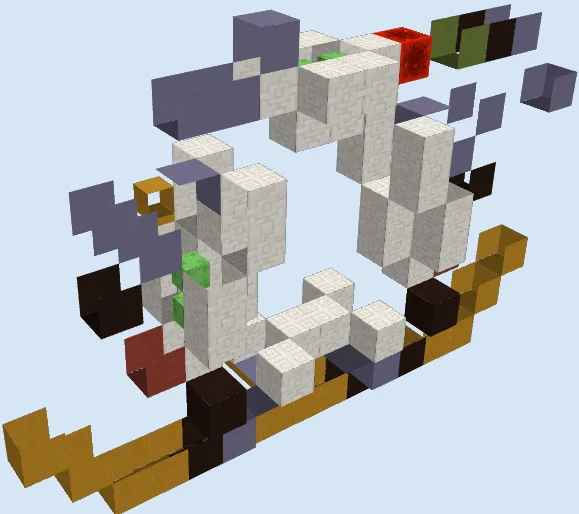
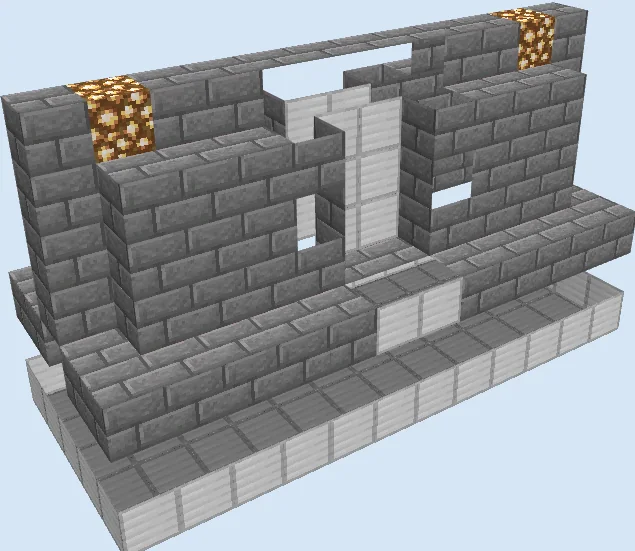
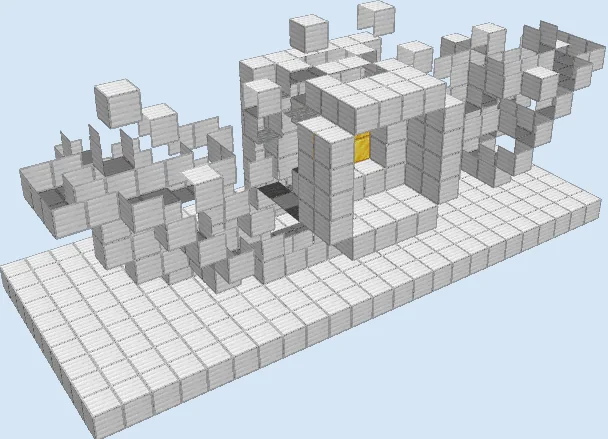
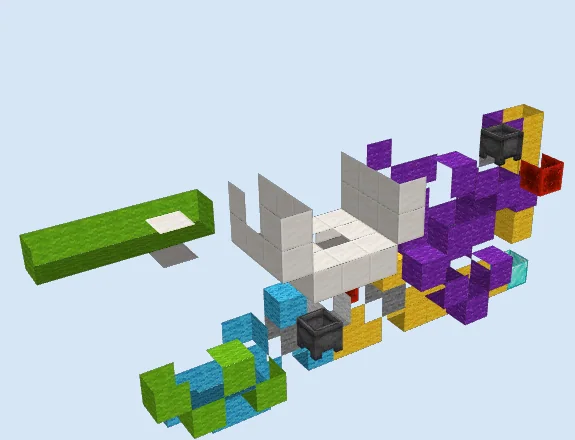
Layers 4–7 of 12Build up layers 4 through 7 by placing quartz blocks to construct the lower half and threshold of the door frame. Run the extended green wool input track out toward the left, mounting a redstone block along the platform.
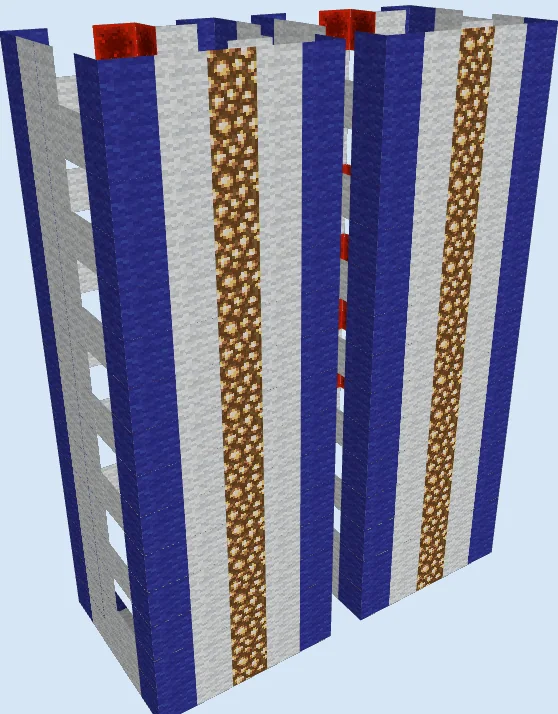
On the right side, continue stacking purple and yellow wool staging blocks. Install the intermediate sticky pistons facing inward toward the doorway opening, along with an additional cauldron and comparator setup to handle mid-level piston timing.
Complete the Upper Frame and Top Logic
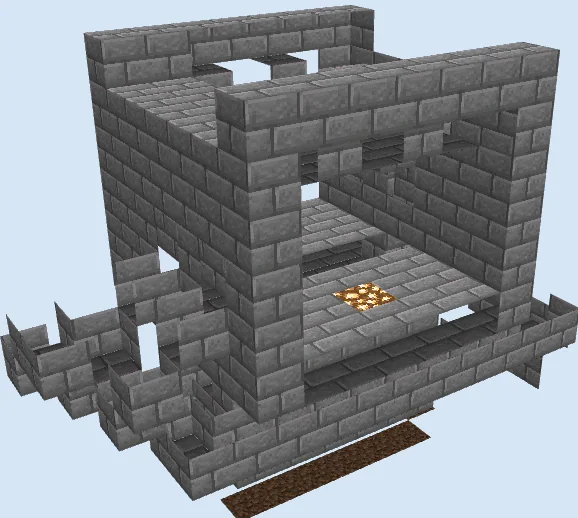
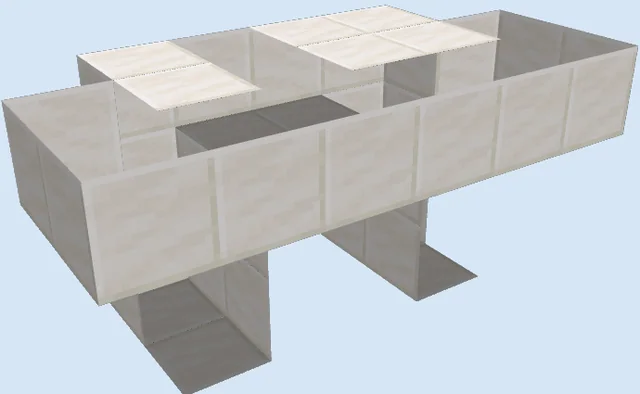
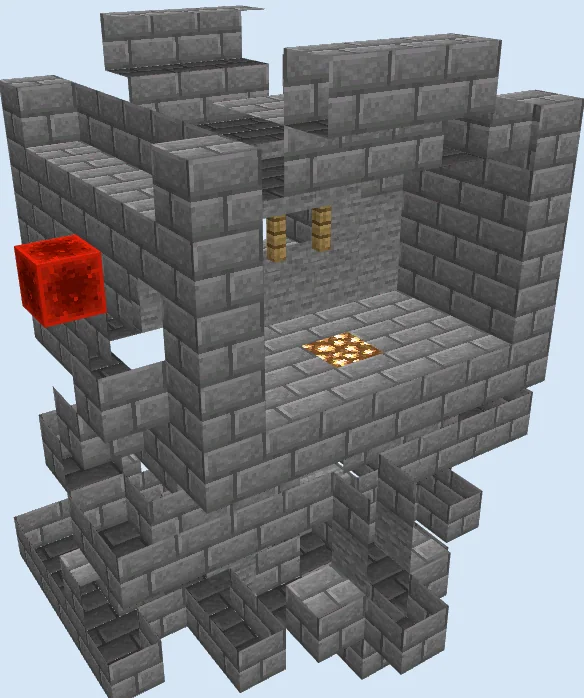
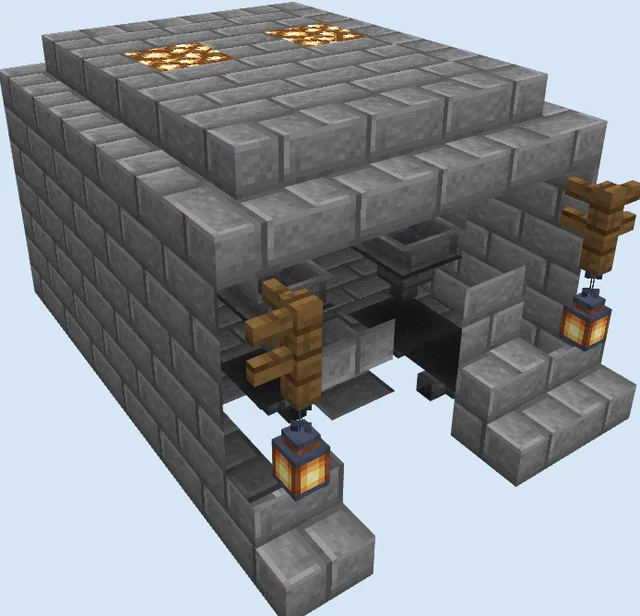
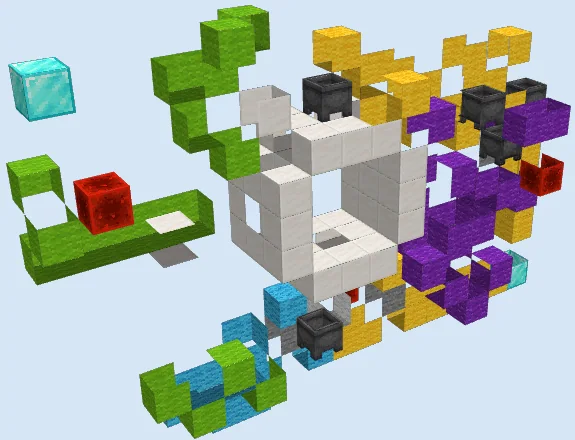
Layers 8–12 of 12Finish layers 8 through 12 by bridging quartz blocks across the top of the portal to close the door frame. Install the glass blocks into the portal opening along with the final set of pistons aligned to drive them horizontally.
Complete the upper green wool arch on the left and the remaining purple and yellow logic ladders on the right. Place the remaining cauldrons, redstone torches, repeaters, and redstone dust across the top surfaces, then attach the control lever to the input terminal.
Finishing touches
Test the door by flipping the lever back and forth while inspecting the movement of the glass blocks. The underlying mechanics rely on classic redstone logic that has remained consistent across versions, but you should always test the timings in a creative world first. Ensure surrounding blocks do not create unintended quasi-connectivity or bud-powering on the pistons.
Frequently Asked Questions
Can I replace the glass blocks with solid blocks?
Yes, solid blocks can be used in place of glass, but verify that any solid blocks pushed near redstone lines do not accidentally suffocate or redirect adjacent redstone dust signals.
Why is the door jamming when I rapidly flip the lever?
The multi-stage piston extender requires the complete timing sequence to finish before reversing; toggling the lever too quickly can cause pistons to spit blocks or desynchronize.
Does this work in modern game versions?
The design uses fundamental piston, comparator, and repeater mechanics that have stayed consistent over the years, though testing in a creative world first is always recommended.